
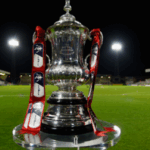

FA Cup 2025-2026 Tickets
Experience the thrill of the FA Cup live—it’s an event you cannot afford to miss! Watch as non-league teams boldly challenge the giants of football, and immerse yourself in the fierce rivalries among passionate fans. For 90 minutes, witness non-stop action as players give their all on the pitch. The excitement, the drama, the cheers, and the jeers create an exhilarating atmosphere that makes this competition truly magnificent.
FA Cup Tickets
Get your FA Cup tickets now! This is your chance to be part of the most prestigious cup tournament in the world. Browse our Events table below to find your favorite team or match, check ticket availability, and secure your seats today! Don’t wait—be a part of the action!
How to Get FA Cup Tickets?
Take a look at the table in the middle of this page—it has everything you need regarding FA Cup fixtures. You will find crucial information on ticket prices for both the Semi Finals and Finals, along with details about match availability. Follow the prompts below and secure your tickets now!
Are you ready to secure your FA Cup tickets? Here’s how to buy them without a membership on our website.
Follow These Steps to Buy FA Cup Tickets:
1. Select Your Match: Choose a match from the FA Cup events table or from our menu.
2. Choose Your Seats: On the events page, select the seating section you want in the stadium and the number of tickets you need. Then, click on “Buy Tickets.”
3. Review Your Order: You will be taken to the shopping cart where you can verify your order. You have the option to “Checkout as a Guest,” log in, or register.
4. Enter Billing Information: Provide your billing address and the delivery address for your tickets, then press “Next.”
5. Confirm Ticket Details: Review your ticket choices, pricing, handling fee, and total cost carefully.
6. Proceed to Payment: Click on “Proceed to Payment” and complete your payment details.
7. Receive Order Confirmation: After a successful payment, expect an email confirming your order along with your order number.
8. Ticket Delivery: Your tickets will be delivered to your address 2-5 days before the match.
Act now and secure your spot at the game! If you have any questions, don’t hesitate to reach out.
Format of the FA Cup
The FA Cup is a knockout tournament with no seeding system, meaning that all teams are drawn against each other randomly. The first team drawn enjoys home advantage, while the winners advance to the next round until only two teams remain to compete for the coveted Cup. The FA Cup winners earn a place in the Europa League, further emphasizing the tournament's significance. In the event of a drawn match, a replay takes place at the opposing team's stadium, followed by extra time and penalties if needed. Notably, there are no replays in the semi-final or final matches.
- FA Cup Qualifying Rounds and Rounds 1 and 2 - The FA Cup qualifying rounds and preliminary stages kick off with the lowest-ranked clubs embarking on their journey in this prestigious tournament. Teams of all levels, from elite clubs in England and Wales to amateur village teams, compete with dreams of advancing far enough to face larger opponents. The ties commence in August and continue until the first round proper, where clubs from Divisions One and Two make their entrance into the competition.
- FA Cup Third Round - The third round is a highlight of the FA Cup, marking the entry of the top two divisions into the fray. The draw for the 2014/15 third round took place on 8 December. Lower-ranked teams have earned their place through determination and resilience and now have the chance to face big names like Chelsea or Manchester City. This round truly embodies the “magic of the Cup,” showcasing thrilling matchups between underdogs and giants, often resulting in jaw-dropping upsets. In the 2008/09 season, a record nine non-league teams reached this stage.
- Fourth and Fifth Rounds - TAs the competition progresses, fewer teams remain. By the end of the fifth round, only eight teams are left standing, competing in the FA Cup quarter-finals. Matches are contested in February and March, and upsets are still very much on the table, particularly as top teams juggle their commitments in both domestic and European competitions. Players often face fatigue, allowing lesser-known teams to capitalize on the situation, as Brighton & Hove Albion did with their memorable 2-1 victory over Liverpool in 1983.
- Quarter Final - The FA Cup quarter-final draw takes place after the completion of the previous round, and it's broadcast live on television, bringing the excitement directly to fans. The clubs that emerge victorious from this round earn the opportunity to compete at Wembley in the semi-finals, the pinnacle of this knockout event. Historically, the quarter-finals have seen remarkable giant-killings; for example, in 1978, Wrexham, a second-division club, defeated Arsenal 3-2, while last season, Wigan, who had just been relegated, claimed a stunning 1-0 victory over soon-to-be Premiership champions Manchester City.
- Semi Finals - Since 2008, FA Cup semi-finals have exclusively been held at Wembley. Previously played at neutral venues, these matches have no replays and must be decided on the same day. The semi-final dates for 2018-2019 were set for 18 and 19 April. A standout semi-final victory occurred when Newcastle United crushed Fulham 6-0 at Anfield. Tickets for the semi-finals are allocated based on average home attendances, ensuring that larger-supported clubs receive a larger share of seats.
- Final - FA Cup finals are grand, unmissable events that have historically been the only football matches broadcast live on television. Coverage would last all day, capturing everything from players’ arrivals to post-match interviews. While fans now enjoy a plethora of football options on TV, the FA Cup maintains a unique charm deeply connected to the community. The final for the 2018-2019 season is scheduled for 30 May, marking the climax of the domestic football calendar. In the iconic 1953 final, Blackpool's Stan Mortensen made history by scoring the only hat trick ever recorded in a Cup final.
FA Cup History
The FA Cup, the oldest football tournament in the world, was first contested in the 1871/72 season. Originally featuring 15 clubs, with Wanderers defeating Royal Engineers 1-0, the competition has evolved significantly. By the 2011/12 season, participation reached a record 763 teams. As of 2014, Arsenal proudly holds the title, having narrowly defeated Hull City 3-2 in the final.
Which club has the most FA Cup wins?
Arsenal and Manchester United firmly hold the record for the most FA Cup victories, each with 11 titles. The largest victory in FA Cup history belongs to Preston North End, who dominated Hyde with a staggering 26-0 win back in 1887. The highest attendance recorded at a final occurred in 1923, when 126,047 fans packed into Wembley to witness Bolton secure victory over West Ham.
Most memorable FA Cup highlights
In the unforgettable 1971/72 season, Hereford United, composed of part-time non-leaguers, shocked Newcastle United by taking the lead just 17 seconds into the match, ultimately holding for a draw. In the replay, with Newcastle leading and only eight minutes left, Hereford’s Ronnie Radford scored an incredible 30-yard goal, followed by Ricky George, who netted the winner—one of the most extraordinary results in FA Cup history. Another iconic moment occurred in 1981 when Tottenham’s Ricky Villa dazzled fans with a stunning 30-yard winner against Manchester City, clinching the Cup for his team.
Tournament Dates
The FA Cup is a knockout tournament with draws held for each round. The competition kicks off in August with rigorous preliminary rounds that pave the way for one of football's most storied events.
